
19th February 2026
Is Invisalign suitable for adults or is it just for teenagers?
A surprisingly common assumption is that Invisalign is mainly aimed at teenagers, a more discreet alternative to the metal braces many of us remember from school. In reality, the opposite is closer to the truth.
Invisalign was designed with adult patients very much in mind. The ability to straighten teeth without brackets, wires, or anything fixed to the teeth makes it particularly well-suited to people in professional or social environments where appearance matters. At Roseacre Dental in Maidstone, a significant number of Invisalign patients are adults in their 30s, 40s, and beyond who have either always had slightly crooked teeth or have noticed their teeth shifting over time.
Why do teeth shift in adulthood?
It is worth understanding why adult patients seek orthodontic treatment in the first place. Teeth are not static. Even if your teeth were relatively straight in your twenties, they can shift gradually over the years, pushed by the pressure of wisdom teeth, changes in bite, natural ageing of the ligaments that hold teeth in position, or the result of never having had braces as a child.
For many adults, the crowding or spacing they notice in their thirties or forties was always there to some degree, but it was tolerable. Now it bothers them. Invisalign gives them an option that fits around a normal adult life rather than requiring months of visible metal braces.
How Invisalign actually works
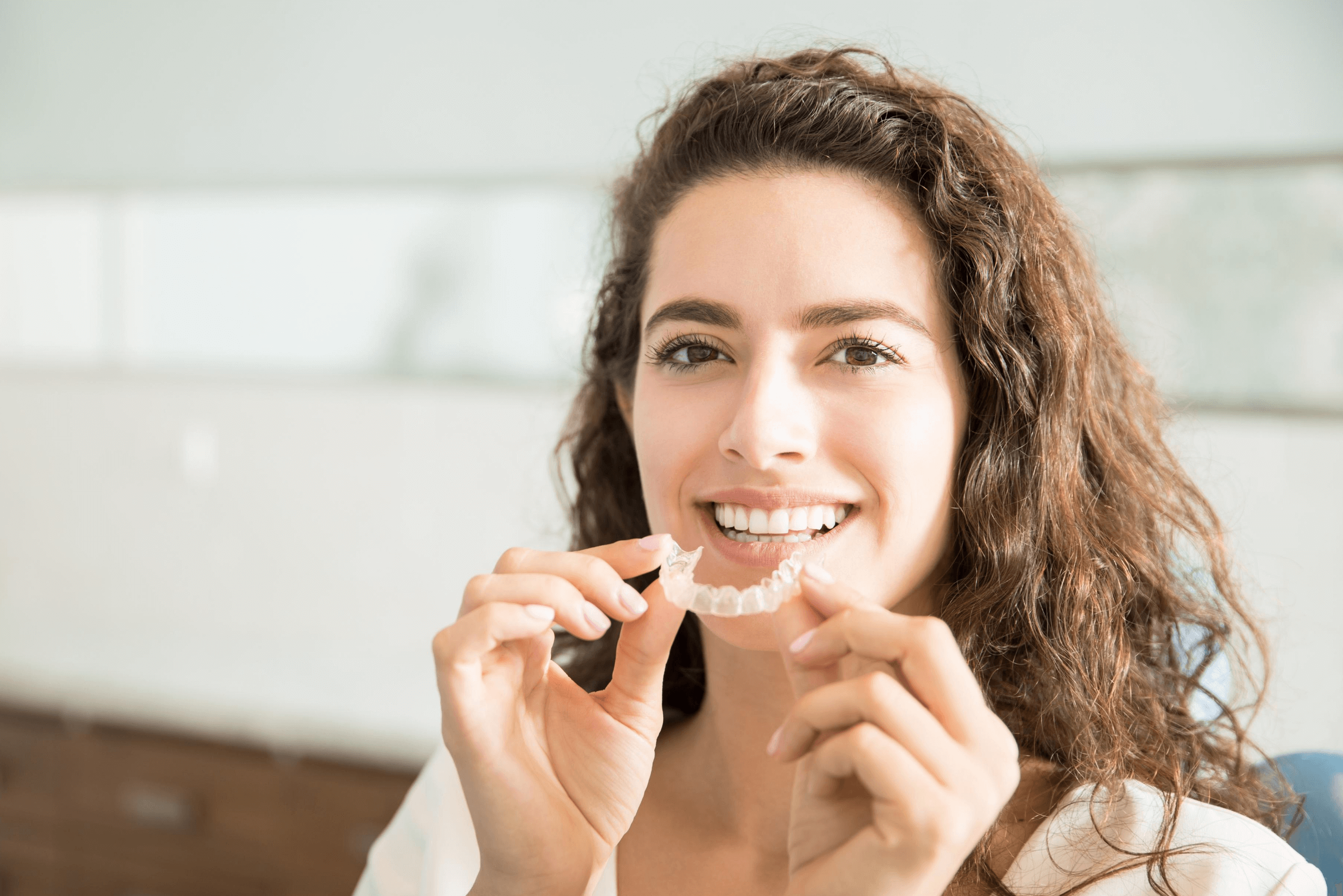
Invisalign uses a series of custom-made clear plastic aligners, each one slightly different from the last, to move teeth gradually into their planned position. You wear each aligner for approximately one to two weeks before moving to the next in the series.
The aligners are made from a smooth, BPA-free plastic and are almost invisible when worn. They fit snugly over the teeth and, for most people, cause minimal disruption to speech after the first day or two.
Because they are removable, you take them out to eat, drink anything other than water, brush, and floss. This means there are no food restrictions and no complicated cleaning routines around brackets and wires.
Is Invisalign as effective as traditional braces for adults?
For mild to moderate cases of crowding, spacing, and certain bite issues, Invisalign can achieve comparable results to fixed braces. It has been used on millions of patients worldwide since its introduction in 1998, and the clinical evidence for its effectiveness is well-established.
That said, it is not the right tool for every situation. Severely rotated teeth, significant bite discrepancies, and complex skeletal issues may still require fixed appliances or specialist orthodontic input. A good clinician will tell you clearly whether Invisalign can achieve what you are hoping for and, if it cannot, what your alternatives are.
Adult teeth also move slightly differently from adolescent teeth. Bone density is higher in adults, which means tooth movement can be a little slower. This is why adult treatment times are sometimes longer than those for teenage patients, though most cases fall within the six to eighteen-month range.
What does Invisalign treatment involve?
At Roseacre Dental in Maidstone, the Invisalign process typically follows these stages:
Consultation and assessment. Your dentist will examine your teeth, take digital impressions, and assess whether Invisalign is suitable for your case. You will usually be shown a digital preview of your expected results before any commitment is made.
Aligner fabrication. Your custom aligner series is manufactured and sent to the practice. Depending on the complexity of your case, this could be anywhere from ten to forty or more aligners.
Wearing your aligners. You wear each aligner for the prescribed period, typically one to two weeks, before progressing to the next. Check-up appointments are usually every six to eight weeks.
Refinements if needed. Occasionally, minor adjustments are made during treatment to account for how teeth have moved. This is normal and does not represent a problem.
Retainers. Once treatment is complete, retainers are essential. Without them, teeth will gradually shift back. This applies to every orthodontic treatment, not just Invisalign.
The one thing that catches patients out
Consistency. Invisalign only works when the aligners are in your mouth. The recommendation is 20 to 22 hours per day, out only for eating, drinking, and cleaning.
Patients who remove them frequently, forget to put them back in after meals, or leave them out for extended periods will see slower results or, in some cases, teeth that do not move as planned. It requires discipline. Most patients find that it becomes a habit very quickly, but it is worth being realistic about before you start.
FAQ’s
Can adults get Invisalign at any age?
Yes, provided your teeth and gums are healthy. There is no upper age limit for Invisalign.
Is Invisalign noticeable to other people?
Most people will not notice them in normal social or professional settings. The aligners are clear and fit closely against the teeth.
Does Invisalign hurt?
Some patients experience mild pressure or discomfort when switching to a new aligner; this usually passes within a day or two. It is a sign that the teeth are moving as planned.
What happens if I lose an aligner?
Contact your dentist as soon as possible. In most cases, you would move to the next aligner in the series or return to the previous one while a replacement is arranged.
Find out More
The clearest way to know whether Invisalign suits your case is to book a consultation. Roseacre Dental’s team in Maidstone will assess your teeth, talk through your goals, and give you a realistic picture of what treatment would involve.